
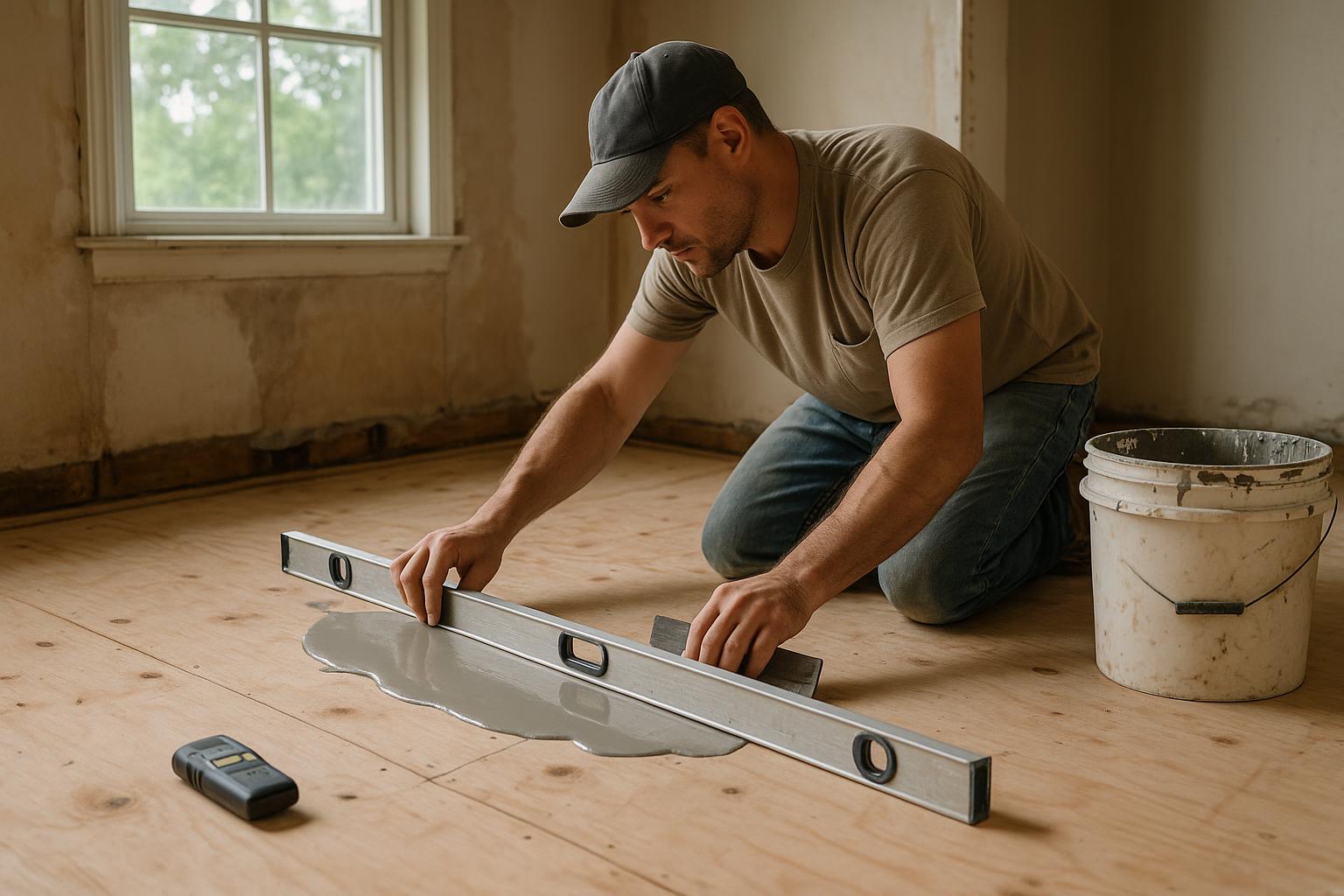
Subfloor prep is the part of the job you never see once the new floor goes down — and it’s the single biggest factor in whether that floor lasts twenty years or fails in one. We level, test, and treat the subfloor before any hardwood, laminate, vinyl, or stone gets installed on top of it.
Why the subfloor decides everything
A flooring material can be the best product on the market and still fail if it’s installed over a subfloor that’s uneven, unstable, or wet. An unlevel or shifting subfloor causes hollow spots, squeaks, lippage between planks, and premature wear — problems that show up months or years later and have nothing to do with the quality of the flooring itself. Most of the botched jobs homeowners describe — a floor that cups, gaps, or feels hollow underfoot — trace back to what happened, or didn’t happen, before installation day, not to the material on top.
Subfloor leveling and building
Before any flooring goes down, we check the subfloor for flatness, soundness, and structural integrity. Low spots get filled with self-leveling compound; high spots get ground down; loose, damaged, or rotted subflooring gets rebuilt or replaced outright — not screwed down and covered up. This matters for every material we install, but it matters most for hardwood and tile-like products, where even a small dip telegraphs through the finished floor as a hollow spot or a squeak that never goes away.
- Checking the subfloor for flatness with a straightedge or laser level, not a guess
- Filling low spots with self-leveling compound and grinding down high spots
- Replacing damaged, delaminating, or rotted plywood or OSB rather than building over it
- Securing loose or squeaky subfloor sections before new flooring is installed
Moisture testing and remediation
Moisture is the other half of the equation, and it’s especially important over the concrete slab foundations common throughout Murfreesboro and Middle Tennessee. Concrete holds and releases moisture long after it looks and feels dry, and that moisture has nowhere to go once flooring seals it in. Wood and laminate flooring are moisture-sensitive by nature — excess moisture underneath can cause cupping, buckling, adhesive failure, or a musty smell that shows up months after installation. We test slab and subfloor moisture levels before installing wood or laminate, and where levels are too high, we address it with the right moisture barrier or remediation step before any material goes down — not after.
This is what “done right the first time” actually means
Anyone can lay flooring over a subfloor that looks fine. What separates a floor that lasts decades from one you’re replacing in a year is the work underneath it — leveling, moisture testing, acclimation, and the correct expansion gap, done every time, not just when it’s convenient. Over 20 years, this is the step we’ve never skipped.
Mold-damage protection
If a subfloor shows signs of past water damage or active moisture, we address that problem before new flooring goes down — not cover it up and hope it stays contained. Sealing mold or moisture damage under a new floor doesn’t solve it; it just hides it until the smell or the damage resurfaces later, usually after the new flooring is already ruined. Handling it up front is part of doing the job right, not an optional add-on.
Acclimation: letting the material adjust before it’s installed
Wood and laminate flooring expand and contract with the humidity in your home, and they need time in that environment before installation to settle at the size they’ll actually be once they’re down. Skip acclimation and install a floor that’s still adjusting, and you get gaps, cupping, or buckling weeks or months later — a problem that looks like a bad install but actually started before the crew ever picked up a nail gun. We build acclimation time into the schedule on every job where the material calls for it.
Frequently asked questions
Do I really need subfloor prep if the floor looks flat already?
Yes — most subfloor problems aren’t visible until the new flooring is already down and starting to fail. A floor can look flat to the eye and still have low spots, loose sections, or moisture underneath that only show up as squeaks, hollow spots, or cupping after installation. Testing and leveling before we start is what prevents that.
Why does moisture testing matter so much over a concrete slab?
Concrete slabs, common throughout Middle Tennessee homes, can hold and release moisture long after they look and feel dry. Once flooring is installed on top, that trapped moisture has nowhere to go, which can cause wood or laminate to cup, buckle, or fail well after installation. Testing before we install lets us catch and address it while it’s still fixable.
What happens if a subfloor has mold or old water damage?
We address it before installing anything new — drying, treating, or rebuilding the affected area as needed. Installing new flooring over an existing mold or moisture problem doesn’t solve it; it just hides it until it resurfaces, usually after the new floor is already down.
How long does acclimation add to my installation timeline?
It depends on the material and your home’s humidity, and we build it into your schedule during the free consultation so there are no surprises. Skipping it to save a few days is exactly the kind of shortcut that leads to gaps and buckling later — we won’t do it just to move faster.
Ask us about what’s under your floor
Whether you’re planning new hardwood flooring, dealing with a floor that’s already failing, or just want it repaired the right way, we’ll check the subfloor first. Tell us about your project and we’ll call you back within a day with honest guidance and a free quote.