
When it comes to creating a pet-friendly home, the flooring you choose is one of the most important decisions you can make. Pets bring energy, joy, and companionship—but they also come with unique challenges for your floors, from scratches and accidents to odors and general wear.
Selecting the best flooring for homes with pets ensures your home stays beautiful, comfortable, and easy to maintain while keeping your furry friends safe. By getting familiar with the pros and cons of different options, you can make a confident decision that balances style, function, and longevity. Let’s take a look at what options are available for pet friendly flooring in the area!
Why Choosing the Right Flooring Matters for Homes With Pets
Pets can quickly turn a new floor into a maintenance headache if the material isn’t up to the task. Selecting the best flooring for dogs or other pets isn’t just about durability; it’s about comfort and hygiene, too. The right floor creates a welcoming environment that:
- Resists Scratches and Dents: Protects surfaces from claws and playful activity.
- Handles Accidents: Waterproof or water-resistant surfaces make cleanup easy and prevent long-term damage.
- Reduces Odors and Bacteria: Non-porous materials prevent smells from setting in.
- Provides Comfort: Softer, warmer surfaces help pets rest and move safely.
Key Features to Look for in Pet-Friendly Flooring
When selecting flooring for homes with pets, focus on features that will protect your investment and keep your pets safe:
- Scratch Resistant Flooring: Look for surfaces that can withstand claws and daily wear. Textured finishes help mask minor scratches and keep floors looking new longer.
- Water and Stain Protection: Flooring should resist moisture, spills, and accidents. Smooth, sealed surfaces make cleanup simple and prevent long-term damage.
- Easy Maintenance: Non-porous surfaces, smooth finishes, and antimicrobial treatments reduce odors, bacteria, and buildup, keeping your home hygienic.
- Comfort and Noise Control: Flooring that softens footsteps and absorbs sound creates a quieter, cozier environment, especially in high-traffic areas or bedrooms.
Best Flooring Options for Pets (Pros & Cons)
Not all flooring is created equal for pet households. Some materials excel at handling scratches, moisture, and odors, while others are best for comfort or aesthetics. Here’s a practical look at the most popular options:
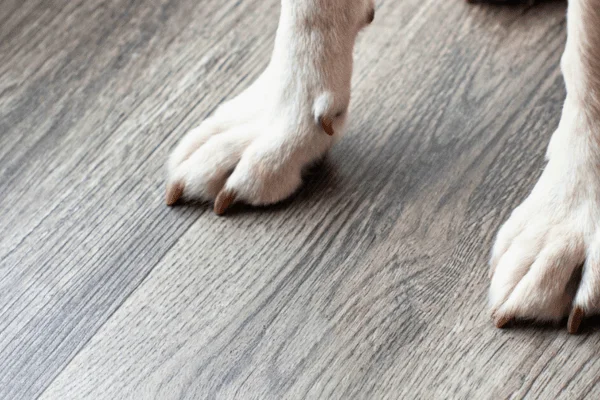
Luxury Vinyl Plank (LVP) Flooring for Pets
Pros: Extremely durable, waterproof, comfortable underfoot, and scratch-resistant. Easy to clean and available in many wood or stone-look finishes.
Cons: Can dent under very heavy furniture; may feel less “natural” than actual wood; subfloor imperfections can telegraph through if not installed properly.
Laminate Flooring as a Scratch-Resistant Option
Pros: Hard, scratch-resistant surface; textured finishes hide minor wear; wide variety of styles and designs.
Cons: Not always fully waterproof. Standing water can seep into seams and cause damage; it can feel harder under paws; it may be slippery for older pets.
Tile Flooring for Maximum Durability
Pros: Nearly indestructible, waterproof, easy to clean, and highly hygienic. Perfect for homes with multiple pets.
Cons: Hard and cold underfoot; can be slippery; grout lines can trap dirt and odors if not sealed properly; less forgiving on pets’ joints.
Engineered Wood Flooring for Pet Owners Who Want a Natural Look
Pros: Natural wood appearance, more scratch- and moisture-resistant than solid hardwood, stylish, and elegant.
Cons: Still vulnerable to scratches and dents from claws; moisture from accidents can damage the surface if not cleaned quickly; may require refinishing over time.
Flooring Options to Avoid if You Have Pets
Some floors may look beautiful, but create more headaches than convenience in pet households.
Why Hardwood and Carpet Can Be Problematic
Hardwood scratches easily and can warp from moisture, while carpet traps hair, dander, stains, and odors. Both can also be slippery, increasing the risk of pets slipping or injuring themselves.
Surfaces That Trap Odors, Hair, and Moisture
Floors that absorb spills or retain pet hair make cleaning challenging and can affect hygiene. Avoid carpets and traditional hardwood in high-traffic pet areas. Instead, hard, smooth, easy-to-clean surfaces like LVP, laminate, or tile maintain cleanliness and comfort.
Is Wood or Hardwood Flooring Good for Dogs and Cats?
Hardwood can be elegant, but it requires careful consideration for homes with pets.
Hardwood Flooring for Dogs and Cats: What to Consider
When choosing hardwood, keep these factors in mind:
- Scratch Resistance: Harder woods better resist your dog’s claws.
- Finish Type: Durable, water-resistant finishes help protect against accidents.
- Temperature & Comfort: Ensure the surface remains comfortable for your pet’s paws year-round.
Wood Flooring for Dogs and Cats vs. Engineered Wood Options
Traditional hardwood offers beauty but scratches easily. Engineered wood provides enhanced durability and moisture resistance while maintaining a natural look.
When Hardwood Can Work—and When It’s a Risk
Works: Calm or small dogs, protective finishes, and areas with rugs.
Risk: Large or active dogs, frequent accidents, and slippery surfaces.
Choose based on your pet’s size, energy, and habits to avoid scratches or water damage.
Best Flooring for Bedrooms With Pets
Bedrooms require a balance of comfort, quiet, and safety, while still standing up to wear from claws or playful pets.
Top Flooring Choices for Pets
- Cork: Soft underfoot, sound-absorbing, gentle on joints, and provides traction to prevent slips.
- Carpet Tiles: Cushioned, warm, easy to replace, and absorb sound for a cozy retreat.
- Luxury Vinyl (Cushioned or LVP): Soft, waterproof, and easy to clean, perfect for pets napping or playing in bedrooms.
Why Professional Installation Matters for Pet-Friendly Flooring
Even the best flooring for homes with pets won’t perform well without proper installation. Professionals ensure:
- Subfloor Preparation: Moisture issues are prevented, and the surface is level.
- Accurate Installation: Misaligned planks or tiles can cause gaps or uneven wear.
- Long-Term Value: Correct installation extends the life of your floor, supports warranties, and maintains aesthetics.
Investing in professional installation protects your home and ensures your floors withstand the challenges of pet ownership.
Final Thoughts: What Is the Best Flooring for Homes With Pets?
The best flooring for homes with pets is durable, scratch-resistant, and waterproof. Luxury vinyl, laminate, and tile offer resilience, ease of cleaning, and comfort, while engineered wood provides natural beauty with better protection than traditional hardwood. Consider your pet’s habits, activity level, and your home’s style when selecting a surface. By choosing wisely and investing in professional installation, you’ll enjoy a functional, beautiful space for years and ensure your furry friends are safe and happy for years to come.
Get professional guidance on scratch-resistant and waterproof flooring for pets to create a friendly home that looks great and lasts. Contact us today for a consultation and let Murfreesboro Flooring help you find the answer to the questions “what is the best flooring for pets?”
Frequently Asked Questions
Maintaining floors with pets requires a combination of regular cleaning and preventative measures. Sweep or vacuum daily to remove hair, dirt, and debris. Mop with pet-safe cleaners to tackle stains and odors without damaging finishes. Place mats at entryways to reduce tracked-in dirt, and consider protective pads under pet bowls. Regular nail trimming for your pets helps minimize scratches, and using washable rugs or runners in high-traffic areas adds extra protection.
Bamboo and cork resist dust, dander, and pet hair, making them ideal for allergy-sensitive households. Vinyl and laminate surfaces are easy to wipe clean and don’t trap allergens. Avoid carpets, which can hold hair, dander, and moisture, creating a less healthy environment.
The lifespan varies depending on the material and how well it’s maintained. Luxury vinyl typically lasts 15–25 years, tile can last 20–30 years or more, laminate usually holds up for 10–20 years, and engineered wood often lasts 15–25 years. Regular maintenance, proper cleaning, and professional installation all impact longevity.
Absolutely! Rugs and mats provide comfort for pets and help protect high-traffic areas from scratches, dirt, and accidents. Look for rugs that are machine washable, stain-resistant, and have non-slip backing to prevent slips for both pets and humans. For kitchens or entryways, waterproof mats can catch spills and reduce cleanup time.
For hardwood, gently blot stains and use a pet-safe cleaner, then dry thoroughly to prevent warping. Tile or luxury vinyl can handle water and mild detergent, making quick cleanups easier. Carpets require a specialized pet stain remover; blot instead of rubbing to avoid spreading stains. Immediate action is key—longer exposure can lead to lingering odors or permanent damage.
Focus on scratch resistance, waterproofing, and ease of cleaning. Comfort underfoot and noise reduction are also important, especially in bedrooms or high-traffic areas. Materials that combine durability with aesthetic appeal, like luxury vinyl or engineered wood, often offer the best balance of function and style.